1. NW–29
  2. Chancellery
  3. Current office · since 29 July 2026
  4. · Rev. October 2026

NW–29 · European policy

Germany's voice in Europe is assembled in Berlin

Before a German minister speaks in an EU Council meeting, the federal government has to agree what Germany wants. That agreement is built across ministries — with the Federal Chancellery as one of its key points of coordination.

  1. European CouncilHeads of state or government — the Chancellor
  2. Council of the EUMinisters in sectoral formations
  3. CoreperPermanent representatives in Brussels
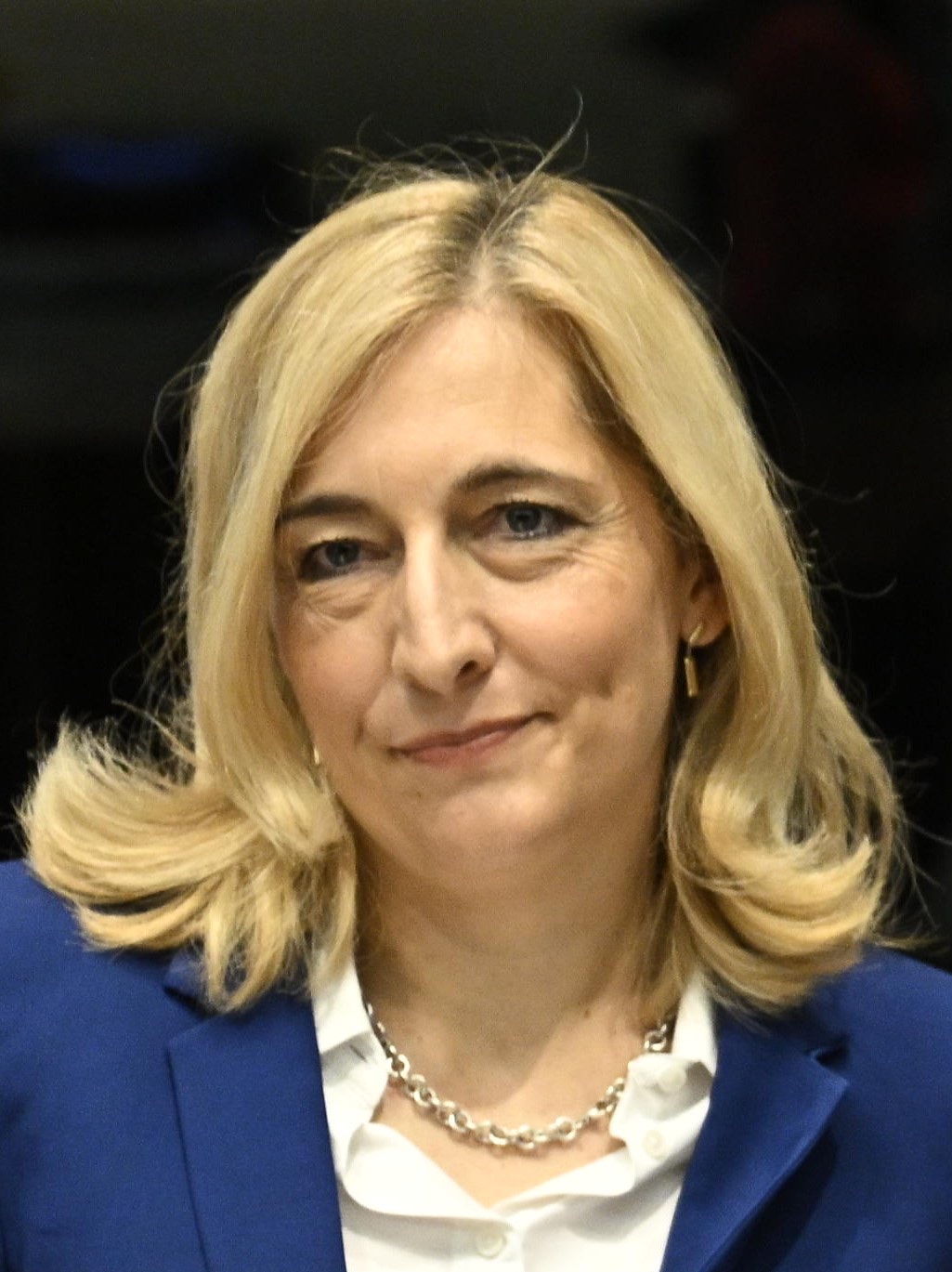
Head-and-shoulders portrait of Nina Warken, smiling, in a blue blazer and white blouse against a dark background
Nina Warken, then Federal Minister of Health, at the EPSCO Council (Health) in Luxembourg, 20 June 2025.Council of the EU · via Wikimedia Commons

Framework

Germany in the European Union

Article 23 of the Basic Law commits Germany to the development of the European Union and sets the rules for how Germany takes part in it. Two federal laws give the Bundestag and the Länder specific rights to be informed and heard on EU matters: the act on cooperation between the federal government and the Bundestag (EUZBBG) and the act on cooperation between the federation and the Länder (EUZBLG). Where the Länder's legislative powers are mainly affected, their positions carry particular weight.

In Brussels, Germany is represented at several levels. The Chancellor sits in the European Council, which sets the Union's political direction. Federal ministers represent Germany in the Council of the EU, which legislates together with the European Parliament in sectoral formations — for example, the Employment, Social Policy, Health and Consumer Affairs Council (EPSCO). The Permanent Representation in Brussels negotiates in the committees of permanent representatives (Coreper) and in Council working groups on the basis of instructions agreed in Berlin.

The quality of those instructions decides how effective Germany is. If the ministries cannot agree, Germany may have to abstain — the so-called "German vote", which partners have often read as indecision. Avoiding it was a declared aim of the 2025 coalition agreement.

Who coordinates what

The architecture of EU coordination

German EU policy has no single "Europe ministry". Responsibility is shared, as summarised by the European Movement Germany in its 2025 overview of the federal government's coordination system.

Actors in German EU policy coordination
ActorRole in EU coordination
Federal ChancellorGuideline competence; represents Germany in the European Council; final arbiter of disputes in the government.
Federal Chancellery — European directorateLed by the Chancellor's European policy adviser: strategic direction, preparation of European Council meetings, conflict resolution between ministries, participation in formal and informal coordination rounds.
Head of the ChancelleryChairs the weekly state secretaries' meeting, which since 2025 includes a standing "EU monitoring" item on upcoming EU initiatives.
Federal Foreign OfficeCoordinating ministry for European affairs; issues most instructions for Coreper II; its Minister of State for Europe chairs the State Secretaries' Committee for European Affairs; heads the Permanent Representation.
Federal Ministry for Economic Affairs and EnergySecond coordinating ministry; its state secretary is deputy chair of the State Secretaries' Committee; issues instructions for Coreper I and on trade and cohesion.
Federal Ministry of FinanceInstructions for the Ecofin Council and the Eurogroup; must be involved in all EU matters with financial effects (GGO § 37(3)).
Specialist ministriesLead responsibility for their EU dossiers and represent Germany in their Council formations — for example, the Health Ministry in EPSCO (Health).
Permanent Representation, BrusselsNegotiates on the basis of Berlin's instructions, builds coalitions with partners and reports back.

Under the GGO, ministries work directly with EU institutions on matters within their own remit; the Foreign Office must be involved in matters of fundamental importance to keep German European policy coherent (§ 37). The State Secretaries' Committee for European Affairs meets monthly; below it, the heads of the ministries' European departments meet to defuse conflicts early.

From dossier to instruction

How a German EU position is formed

A simplified path for a typical EU legislative proposal. It is generic and does not describe a specific case.

  1. Commission proposal

    The lead ministry analyses it, informs the Bundestag and Länder, and involves other ministries.

  2. Working level

    Ministries agree a position; the Permanent Representation negotiates in Council working groups.

  3. Department heads

    European department heads defuse disputes; the Chancellery's European directorate takes part.

  4. State secretaries

    Monthly EU committee and weekly "EU monitoring" in the meeting chaired by the Head of the Chancellery.

  5. Instruction

    An agreed instruction goes to Coreper and the minister in the Council. Without agreement, Germany may abstain.

Former office · 2025–2026

Her documented European and international record

As Federal Minister of Health, Nina Warken represented Germany in the EU's health ministers' council and in international health forums. These positions belong to her former ministerial office; they are not attributed to her current role.

20 June 2025Luxembourg

EPSCO Council (Health)

At the EU health ministers' council, ministers discussed the security of medicine supply and the competitiveness of the pharmaceutical industry. According to the Federal Ministry of Health, she supported the European Commission's proposal for a Critical Medicines Act, presented in March 2025, as a means of strengthening manufacturing in Europe and making supply chains more reliable. She presented three initiatives as complementary — the EU pharmaceutical package to speed up access to innovation, the Critical Medicines Act, and the revised Urban Wastewater Treatment Directive dealing with micropollutants — with the shared aim of making Europe more independent and resilient in medicine supply, including in times of crisis.

~80%Share of Europe's antibiotics supplied from outside Europe
Source
Federal Ministry of Health (press release)
Year
2025
Context
Figure cited by the minister at the EPSCO Council on 20 June 2025 to illustrate Europe's dependence on non-European suppliers.
18 May 2025Geneva

Meeting with the WHO Director-General

On the eve of the World Health Assembly she met WHO Director-General Tedros Adhanom Ghebreyesus. The Health Ministry announced an additional €10 million for the World Health Organization to support reforms made necessary by the withdrawal of the United States, and welcomed the expected adoption of the international pandemic agreement.

20 January 2026Davos

World Economic Forum

At the World Economic Forum she again met the WHO Director-General and, according to the ministry, affirmed Germany's support for multilateral cooperation, while discussing investment in pharmaceutical research and manufacturing with industry representatives.

Health security as a European question

Current office

European policy from the Chancellery

In her present role, Nina Warken's European responsibilities are institutional rather than sectoral. As chair of the state secretaries' meeting she presides over the forum in which upcoming EU files are flagged and disputes between ministries can be addressed before they harden. The substance of German positions remains with the lead ministries, the coordinating ministries and, at the top, the Chancellor. No individual European positions taken by her as Head of the Chancellery are documented on this site.

Cross-border questions — energy networks, internal border controls, health threats, transport links — illustrate why this coordination matters. They rarely fit one ministry's remit, often involve the Länder bordering neighbouring states, and increasingly have a European dimension that has to be negotiated in Brussels. Whether the more centralised coordination promised in 2025 reduces "German votes" in practice is a question observers continue to follow.

Interministerial coordination · The Chancellery role · Federal policy.