1. NW–27
  2. Chancellery
  3. Current office · since 29 July 2026
  4. · Rev. October 2026

NW–27 · Federal policy

Setting the agenda of a coalition government

APrioritiesTranslating the coalition agreement and the Chancellor's guidelines into a sequence of projects.
BCross-cutting issuesQuestions no single ministry owns: security, state modernisation, Europe.
CLegislationKeeping the cabinet and parliamentary calendars aligned.
DCrisis & communicationA shared situation picture and a coherent public voice.

The Chancellery does not make policy in the way a ministry does. Its contribution to federal policy is the order, coherence and pace of the government's work — which, in a three-party coalition with a full reform programme, is itself a political task.

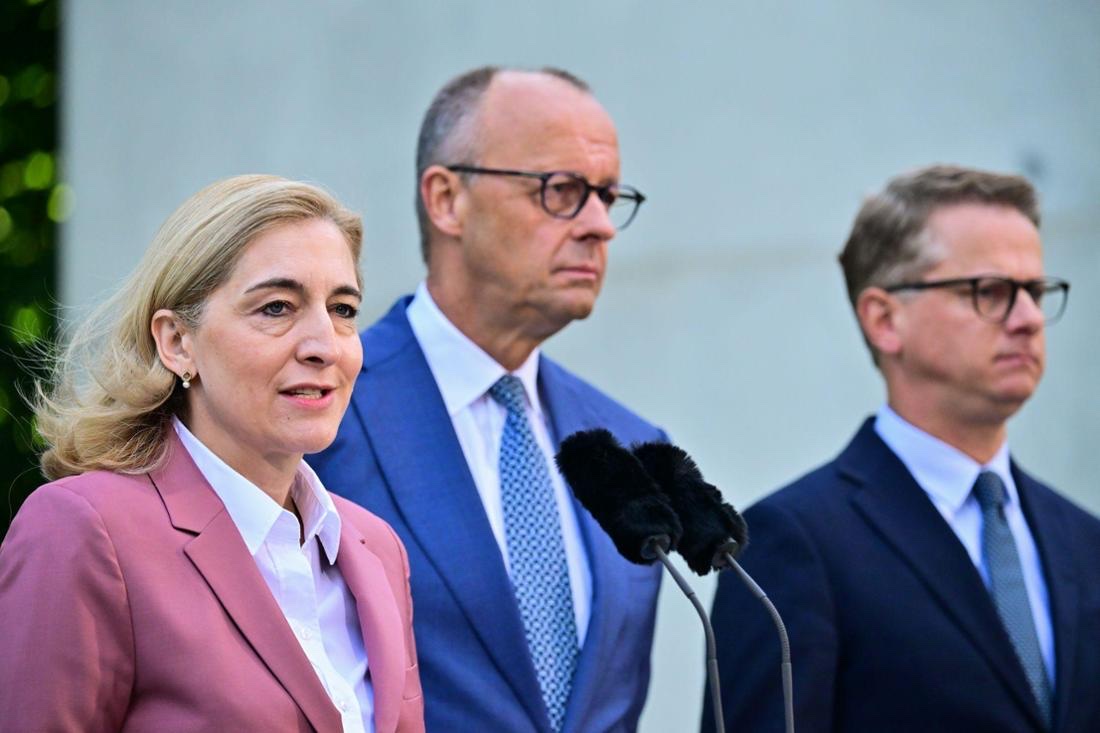
Nina Warken in a pink blazer speaking into microphones, with Chancellor Friedrich Merz and Carsten Linnemann standing behind her
Berlin, 24 July 2026: Nina Warken speaks at the announcement of the cabinet changes, with Chancellor Friedrich Merz and Carsten Linnemann.Press photograph · editorial use

Priorities

From coalition agreement to work programme

The political programme of the federal government is set out in the coalition agreement concluded by CDU, CSU and SPD in 2025 under the title "Verantwortung für Deutschland". It is a political document, not a legal one, and it names far more projects than can be handled at once. Deciding what comes first — and what depends on what — falls largely to the Chancellor and to the coalition leadership, with the Chancellery preparing the options and tracking progress.

That tracking work is unglamorous but central. The Chancellery's mirror units know where each ministry's projects stand; the Head of the Chancellery chairs the weekly state secretaries' meeting where cabinet items are cleared; and the Chancellery's planning capacity looks beyond the next cabinet agenda to the budget cycle, the parliamentary calendar and the timing of elections in the Länder. When a coalition promises to "deliver", much of the delivery management takes place here.

Priority-setting is also shaped by forces outside the government's control: rulings of the Federal Constitutional Court, EU deadlines, economic data and crises. A large part of the Chancellery's agenda work consists of absorbing such shocks without losing the thread of the programme.

Cross-cutting issues

Questions no ministry owns alone

Some subjects cut across so many portfolios that the Chancellery becomes their natural point of coordination. Three examples from the current legislative period show the pattern.

National Security Council

By cabinet decision of 27 August 2025 the government set up a cabinet committee called the National Security Council. Chaired by the Chancellor, it includes the Head of the Chancellery and the ministers of finance, foreign affairs, interior, justice, economy, defence, development and digital affairs. A staff unit in the Chancellery supports it. Its tasks: a consolidated security picture, strategic foresight and resilience exercises.

Federal modernisation agenda

On 4 December 2025 the Chancellor and the Minister-Presidents of the sixteen Länder agreed a federal modernisation agenda aimed at less bureaucracy, fewer reporting duties and faster planning and approval procedures. Such agendas depend on coordination between federal and Länder administrations — a task assigned since the July 2026 reshuffle to Philipp Amthor as Minister of State for Federal-State Cooperation. Domestic policy.

EU positions

German positions in the EU Council are prepared by the lead ministries and coordinated between the Chancellery's European directorate, the Foreign Office and the economics and finance ministries. Since 2025 upcoming EU files have been a standing item in the state secretaries' meeting chaired by the Head of the Chancellery. European policy.

Instruments

Legislation, crisis response, communication

Three further instruments shape how federal policy reaches the public.

The Chancellery's policy instruments

Institutional practice

Legislative coordination

The Chancellery must be told when a bill is being drafted and kept informed of its timetable (GGO § 40). It aligns the cabinet's calendar with the parliamentary groups and the Bundesrat, whose plenary dates determine when consent laws can pass. The route of a bill.

Crisis response

According to the Federal Agency for Civic Education, the Chancellery runs a round-the-clock situation centre that brings together crisis information from the Foreign Office, the Interior and Defence ministries and others and keeps the Chancellor briefed. In acute crises, it is where a shared picture for decisions is assembled.

Communication

Government communication is the task of the Press and Information Office of the Federal Government, a separate supreme federal authority directly under the Chancellor and headed by a state secretary. Under GGO § 25 it informs the public about the government's aims, and cross-ministry public-relations measures must be agreed with it.

Boundary

None of these instruments transfers policy decisions to the Chancellery. Bills remain the lead ministry's responsibility, crisis measures are taken by the competent authorities, and the Press Office speaks for the government as a whole.
Context · autumn 2026

The reform agenda as reported

This section summarises public reporting on the government's reform programme in the first months of Nina Warken's term at the Chancellery. It records reported statements and the political context — not decisions attributed to her.

  1. Summer 2026

    Social reforms on the agenda

    Reforms of long-term care insurance, statutory health insurance and pensions are among the coalition's central projects for the second half of the year. The statutory health insurance stabilisation act had been passed in July; long-term care insurance faced projected funding gaps for 2027 and 2028.

  2. September 2026

    Pressure after Länder elections

    After state elections in Mecklenburg-Western Pomerania and Berlin, media reports described growing tension within the coalition and impatience in the business community.

  3. 22 September 2026

    Message to business associations

    At a parliamentary evening of DIHK, BDA and BDI in Berlin, the Head of the Chancellery was reported by dpa as saying that bold and comprehensive reforms would come, that there was no retreat from them, and that they should be implemented with more unity and speed.

  4. Early October 2026

    "Faster and quieter"

    In a ZDF interview she was reported as calling for more composure in reform debates. ZDF noted that the coalition had agreed a first stage of long-term care reform, while differences over pensions — including early retirement rules — persisted.

Analysis

The competing expectations on the Chancellery

Business associations have pressed the government to move faster on labour costs, bureaucracy and energy prices. Trade unions, social associations and parts of the governing parties warn that savings in pensions, health and long-term care could shift burdens onto employees and patients. Health-sector organisations criticised the July 2026 savings package sharply. A coordinating office cannot resolve these conflicts of interest; it can only structure how and when they are decided.

There is also a tension between speed and deliberation. Compressed timetables help a coalition demonstrate capacity to act but draw criticism from opposition parties and stakeholders that consultation has been cut short. Where the line should run is a political judgement that recurs with every major reform.

For the office itself, autumn 2026 is a test of the classic Chancellery task: keeping a large programme moving through ministries, coalition committee, cabinet and parliament. How the reforms turn out will be the responsibility of the ministers who draft them and the majorities that pass them. The centre of federal coordination · Key priorities.