Political beginnings · NW–07
Fourteen years before Berlin
Between joining the Junge Union in 1999 and entering the Bundestag in 2013, Nina Warken built a political base on two levels at once: the town council in Tauberbischofsheim and the national leadership of the CDU's youth organisation.
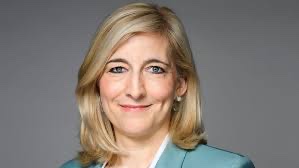
Entry
Junge Union, 1999
According to her Bundestag biography, Nina Warken joined the Junge Union in 1999, a year after her Abitur and while studying law in Heidelberg. The Junge Union Deutschlands is the joint youth organisation of the CDU and the Bavarian CSU, open to members up to the age of 35, and one of the largest political youth organisations in Germany. It is formally independent of the party but closely tied to it: many CDU and CSU politicians began their careers in its local, district and state branches, and its federal leadership is a recognised training ground for national politics.
She remained a member until 2014. In 2000 she also joined the CDU itself. The sequence — youth organisation first, party membership soon after — is a common route into German party politics, where candidate selection for local, state and federal elections is decided by party members and delegates rather than by open primaries.
National role · 2006–2014
Deputy federal chair of the Junge Union
From 2006 to 2014 she was one of the deputy federal chairs of the Junge Union Deutschlands. The federal executive is elected by the organisation's national congress (Deutschlandtag) and represents the youth organisation within the CDU and CSU, in party commissions and in public debate. Eight years in that body meant regular work with party leaders and federal politicians long before she held a federal mandate herself.
The national role coincided almost exactly with her early years as a lawyer, admitted in 2006, and with her second council term in Tauberbischofsheim. It ended in 2014, a year after her election to the Bundestag, which is also when her JU membership ended.
Inside the CDU
Positions in the party structure
The CDU is organised from local associations through district and regional associations up to the state party and the federal party. Her Bundestag biographies record positions at several of these levels.
CDU Main-Tauber
Member of the district executive (Kreisvorstand) of the CDU in her home district.
CDU North Württemberg
Member of the executive of the regional association (Bezirksverband) Nordwürttemberg, one of the CDU's four regional associations in Baden-Württemberg.
Internal security
Chair of the CDU's federal expert committee on internal security (Bundesfachausschuss Innere Sicherheit), according to her 19th- and 20th-term biographies.
Frauen Union
Member of the Frauen Union's North Württemberg district executive and later of its federal executive — before her election as federal chair in 2025.
The later party offices — Secretary General of the CDU in Baden-Württemberg from 2023 and federal chair of the Frauen Union from 2025 — are covered on CDU leadership.
Municipal politics · from 2004
Town council and district council
Her first elected office was local. In 2004, while still a legal trainee, she was elected to the municipal council of Tauberbischofsheim, the district town of the Main-Tauber district. She held the seat for twenty years, until 23 July 2024. In 2014 she was also elected to the Kreistag, the council of the Main-Tauber district, where she served until the local elections of May 2019.
Both bodies are directly elected for five-year terms under Baden-Württemberg's local-government law. The municipal council decides on the town's budget, development plans, local infrastructure and fees; the district council handles tasks that exceed a single municipality, from district roads and public transport to social assistance and waste management. How these bodies work, and what her local roles involved, is set out on Local politics.
Context
Why local experience matters in federal politics
The following points are general features of the German system, not statements of her motives. They explain why a council seat is more than a stepping stone.
Federal laws are implemented locally
Under the Basic Law, the Länder generally execute federal laws, and much of that work falls to districts and municipalities — registration offices, social services, building authorities, schools' physical infrastructure. Councillors see where legislation succeeds or stalls in practice.
Money follows tasks — or fails to
A recurring conflict in German federalism is whether new duties for local authorities come with adequate funding. Local office makes that question concrete in every budget debate.
Party careers are built from below
Candidates for the Bundestag are nominated by party members and delegates at constituency and state level. Local office builds the networks and the visibility on which those nominations depend.
Parliament has a forum for it
The Bundestag maintains a Subcommittee on Municipal Affairs. In the 18th electoral term she was a deputy member of it, alongside her full membership of the Committee on Internal Affairs.
Transition · 2013
Toward federal politics
In the federal election of September 2013 she was elected to the Bundestag via the CDU's state list for Baden-Württemberg. The list route depends on a candidate's position as decided by a state party conference — itself a reflection of standing within the party built up over the preceding years. In the 18th Bundestag she became a full member of the Committee on Internal Affairs and of the committee of inquiry into the activities of the NSA, in which she served as her group's spokesperson.
She did not give up local office on entering parliament. She took her seat on the district council a year later, in 2014, and kept her town-council seat for more than a decade after first arriving in Berlin. That overlap of local and federal mandates lasted until 2024 — the year before she joined the federal government. The subsequent career is told on Bundestag career and in the timeline.
Sources & further reading
- German Bundestag — biography, 21st term
- German Bundestag — archived biography, 20th term
- German Bundestag — archived biography, 19th term
- German Bundestag — archived biography, 18th term (committees, list mandate)
- Federal Government — Nina Warken, curriculum vitae
- Basic Law — Article 83 (execution of federal laws by the Länder)